Home Espresso Setup by Budget
Disclosure: This page contains affiliate links. If you buy through them we may earn a commission at no extra cost to you. As an Amazon Associate I earn from qualifying purchases. Details.
Home espresso can be deeply rewarding and also an expensive rabbit hole. The trick is to spend in the right order. We don't list prices because they change constantly, and we haven't tested machines ourselves. The tiers below describe types of equipment and trade-offs, with technique guidance from Baratza.
The three things espresso needs
- An espresso-capable grinder. Fine grinding with small, precise adjustments. Baratza notes that on espresso grinders, small clicks make big differences.
- A machine that delivers hot water at consistent pressure. Baratza's dial-in checklist includes making sure the water is hot enough and flowing consistently, and watching the pressure gauge if you have one.
- Fresh coffee. Baratza lists freshly roasted coffee as the first variable to check.
Plus a scale: Baratza's starting recipe is 18 g in, 36 g out, in 25-32 seconds.
Tier 1: Starter
Who it's for: curious about espresso, not sure it'll stick.
- Grinder: an entry-level grinder that specifically supports espresso, or a hand grinder capable of espresso.
- Machine: an entry-level semi-automatic machine. Many come with pressurized baskets that are more forgiving of grind; non-pressurized baskets allow more control once your grinder can handle it.
- Accessories: a scale with a timer and a tamper that fits the basket.
Entry-level espresso machines → Amazon · Espresso-capable grinders → Amazon
Expect: a learning curve. Use our troubleshooting guide.
Tier 2: Enthusiast
Who it's for: making espresso daily and wanting more consistency and milk drinks.
- Grinder upgrade first. A grinder with finer adjustment steps (Baratza describes micro and macro adjustment on some models) makes dialing in easier.
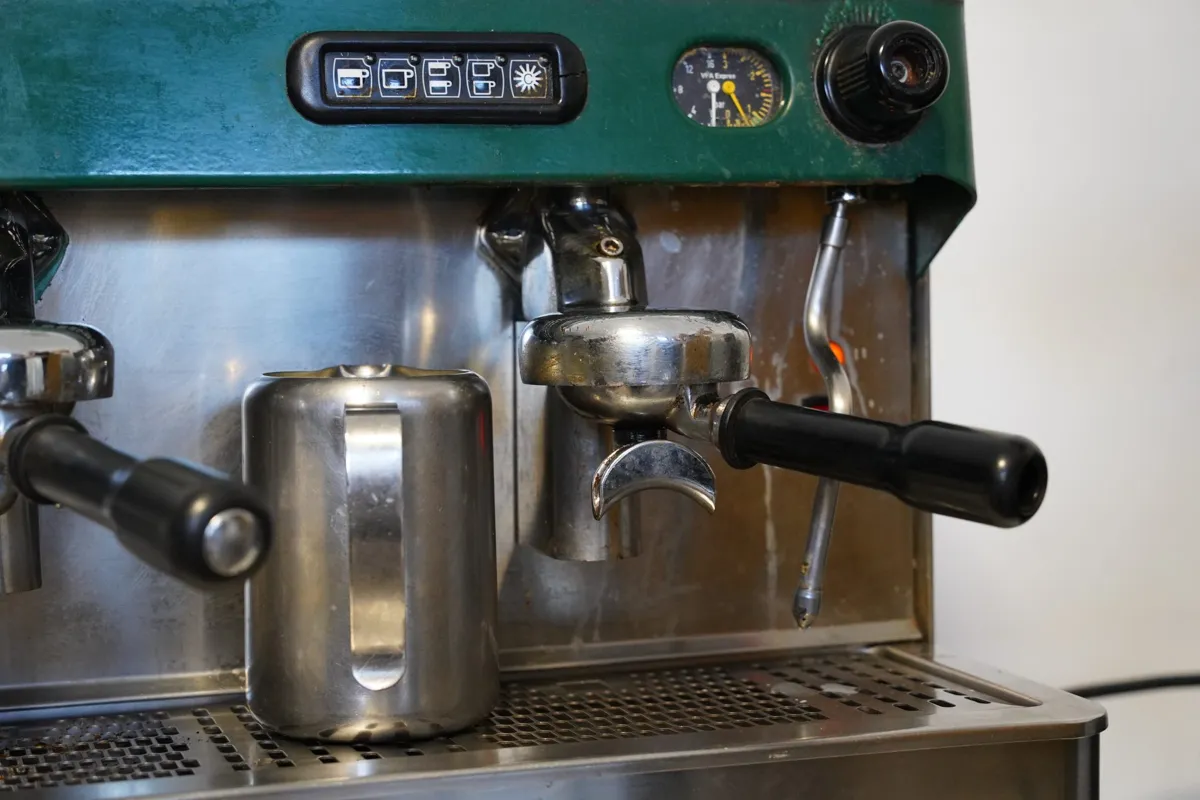
- Machine: more temperature stability and stronger steaming. Machines with a pressure gauge help you see what's happening.
- Accessories: a distribution tool, a milk pitcher, and a knock box.
Machines with pressure gauges → Amazon · Milk pitchers → Amazon · Knock boxes → Amazon
Tier 3: Serious hobbyist
Who it's for: wants café-level control.
- Grinder: a high-end grinder, chosen by flavor preference. Baratza says conical burrs lean round and sweet, while flat burrs lean clean and articulate.
- Machine: precise temperature control and possibly pressure profiling.
- Water: consider your water quality and the maker's recommendations for scale prevention.
Alternatives to a full espresso setup
- Super-automatic machines grind and brew at the push of a button. You get convenience but less control.
- Capsule machines: the easiest, but not the same as freshly ground espresso.
- AeroPress: not espresso, but strong, concentrated coffee in about a minute. AeroPress describes it as rich like espresso. See brew methods.
- Moka pot: a stovetop brewer that makes strong coffee; not true espresso pressure.
Common mistakes
- Spending everything on the machine and using a grinder that can't do espresso.
- Skipping the scale. Without weighing, troubleshooting is guesswork.
- Stale or pre-ground coffee. Baratza puts freshness first.
- Changing many variables at once. Baratza says to keep dose consistent and adjust grind in small increments.
- Ignoring cleaning and descaling. Follow the manufacturer's maintenance schedule.
The SCA's standards
The Specialty Coffee Association publishes certification standards for home coffee grinders (SCA-320) and semi-automatic and automatic espresso machines (SCA-350), available to members. A product claiming SCA certification has been evaluated against those specifications. We haven't reviewed the contents of the standards.
Your first-week plan
- Buy fresh beans with a roast date.
- Use Baratza's recipe: 18 g in, 36 g out, 25-32 seconds.
- Adjust only the grind until the time and taste are right.
- Write down what works.
Next: choose the grinder.
FAQ
What's more important for espresso, the machine or the grinder?
Both matter, but an espresso-capable grinder is essential. Espresso needs very fine, precisely adjustable grinding; Baratza notes small clicks make big differences.
What accessories do I need for espresso?
A scale (to weigh dose and yield), a tamper that fits your basket, and optionally a distribution tool. Baratza's recipe is measured in grams and seconds, so a scale with a timer helps.
Related guides
- Burr Grinder Guide: Conical vs. Flat, Steel vs. Ceramic
- Why Is My Espresso Sour (or Bitter)? A Troubleshooting Guide
- Coffee Gifts Under $50